
How to Make a Monster
What Monsters know about being Human

The Monster has been waiting at the end of every Maiden story, checking her teeth in the mirror.
The word comes from the Latin monstrum, from monere, to warn, and kin to monstrare, to show. One shelf over from the maiden, she has been called unnatural, cursed, hideous, hysterical, and, when all else failed, difficult.
This is New Lore Order, Episode 04. Mind the stitches.
The Grin
She is still smiling when the thing behind her face arrives. The mouth holds, and the eyes go bright and wet at the rims. It is the look of someone who might weep or might lunge, and has not yet decided which would feel better. She has been lovely the whole way through, very obliging and soft in the places the story wanted her soft. And then, somewhere past where a face should be able to hold a smile, it slips its meaning , and is now red and glistening and not remotely sorry. The wanting and the violence come up the same throat, and nobody warned you they share a route.
This particular grin belongs to Pearl (2024), holding the last frame of Ti West’s Film. Our sweetheart in overalls who did everything the story ask, smiling into the camera long past comfort. The Maiden left her at the edge where no one was coming, and now the Monster is here, on the other side, where she is already changed, and watching to see if you will keep watching. Of course, you came to look.

The Awareness Problem
Mary Shelley was nineteen when she wrote arguably the most misread monster in modern literature. Everyone remembers the bolts on the TV, and far fewer remember that her creature reads Paradise Lost, picks up language by eavesdropping, and argues, rather well for his own right to exist. His great crime, was that he became conscious, and it’s also the reason that sends his maker sprinting into the night. Victor builds the whole body with his own hands and feels nothing but pride, right up until the eyes open and something looks back. The made thing was fine as a project, a triumph of knowledge and ambition if we want to be frank. But as a witness? ...no no, that was unbearable.
Which is exactly why the Monster reads as the Maiden’s sequel. In the last New Lore Order essay, a girl called Pandora asks, ‘what happens if I open this jar?’ Shelley runs that experiment to it’s conclusion, and gives the Maiden’s curiosity a body and a voice, but no where safe to put either. The creature was not born a monster, but was abandoned before it had the chance to become anything else, and sadly, inheriting the consequence of someone else’s desire.
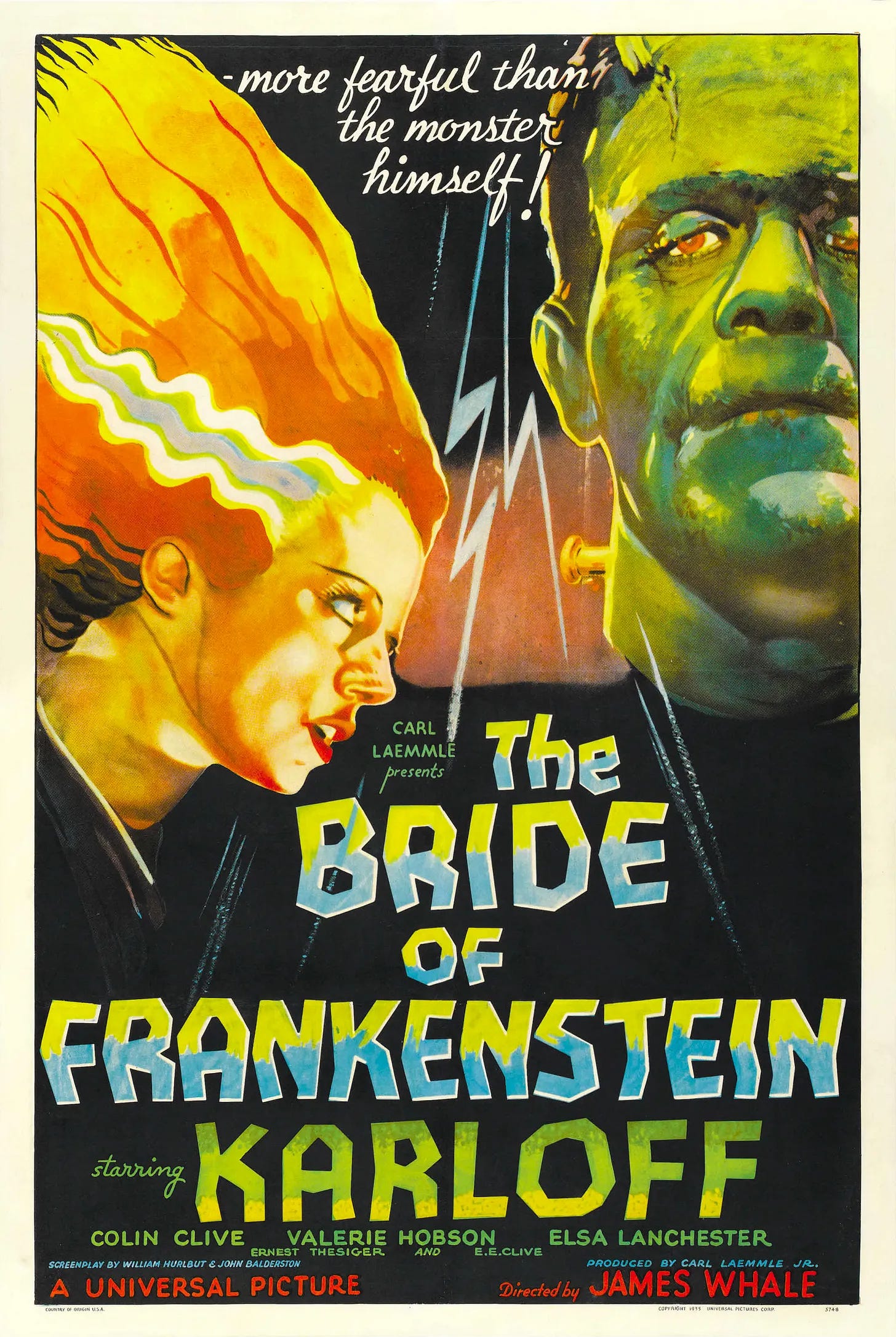
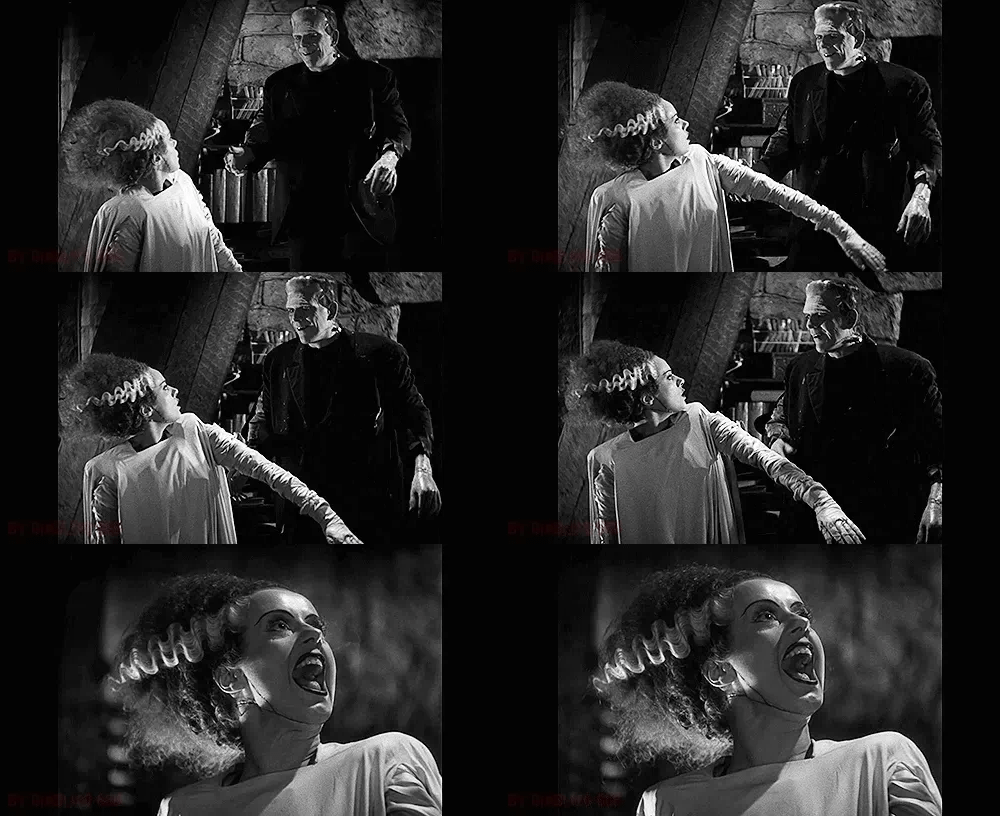
James Whale’s Bride of Frankenstein (1935) feels the cruelty of the whole arrangement all the way down. Elsa Lanchester gets about seven minutes of screen time and plays the entire tragedy inside them. Made to be wanted, allowed to want nothing back, hissing at the groom she was assembled for before she’s drawn a dozen breaths. Someone with the power to decide builds the thing they are most afraid of, points at it, and names it the monster. The fear gets another body so they don’t have to carry it themselves. Tidy, worked for centuries. But what it never accounts for is that fear when given a body (of any kind) does not tend to stay where you set it down.
Couture as Controlled Mutation
Fashion worked this out long before it admitted to it, and then it did what fashion (industry) does best, which is sell the wound back to you at retail.
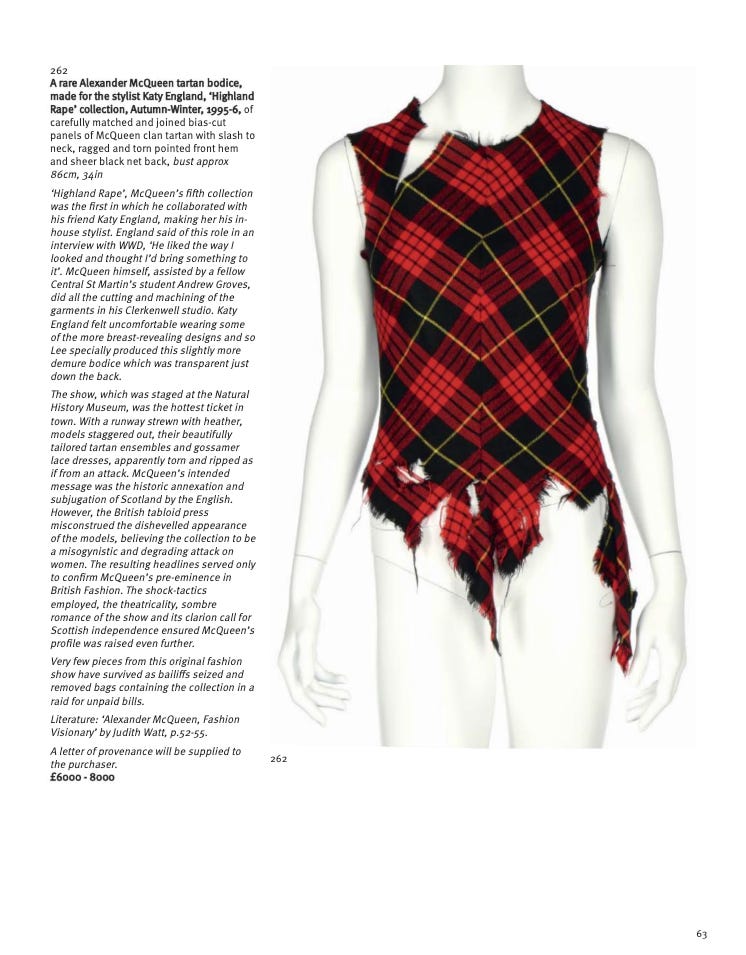
Alexander McQueen never treated the monster as the opposite of beauty, because from where I’m standing, to him it was the evidence. Highland Rape (1995), sent models out in torn lace and savaged fabric, the clothes ripped to show what clothes are usually there to hide. The press called it misogynist and read it exactly backwards, because McQueen was trying give them a history lesson. He was referencing the 18th century Jacobites Rising and the 19th century Highland Clearances, and interpreting them as England’s systematic emptying of Scotland by force. Symbolically I read, the tartan on the runway shredded because that is what Empire does to bodies, so why should the tailoring be polite about it.
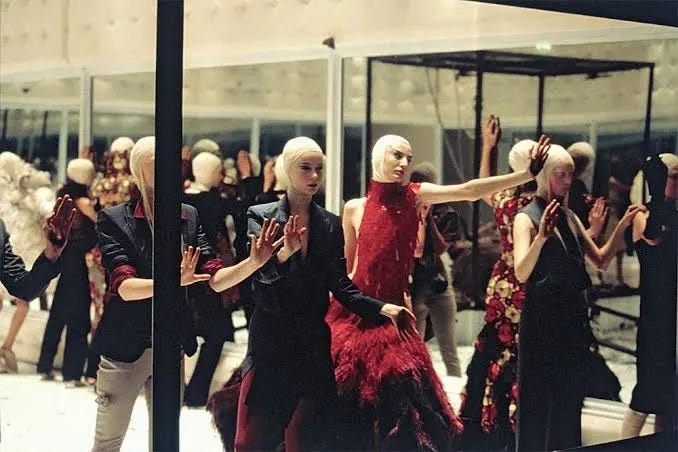
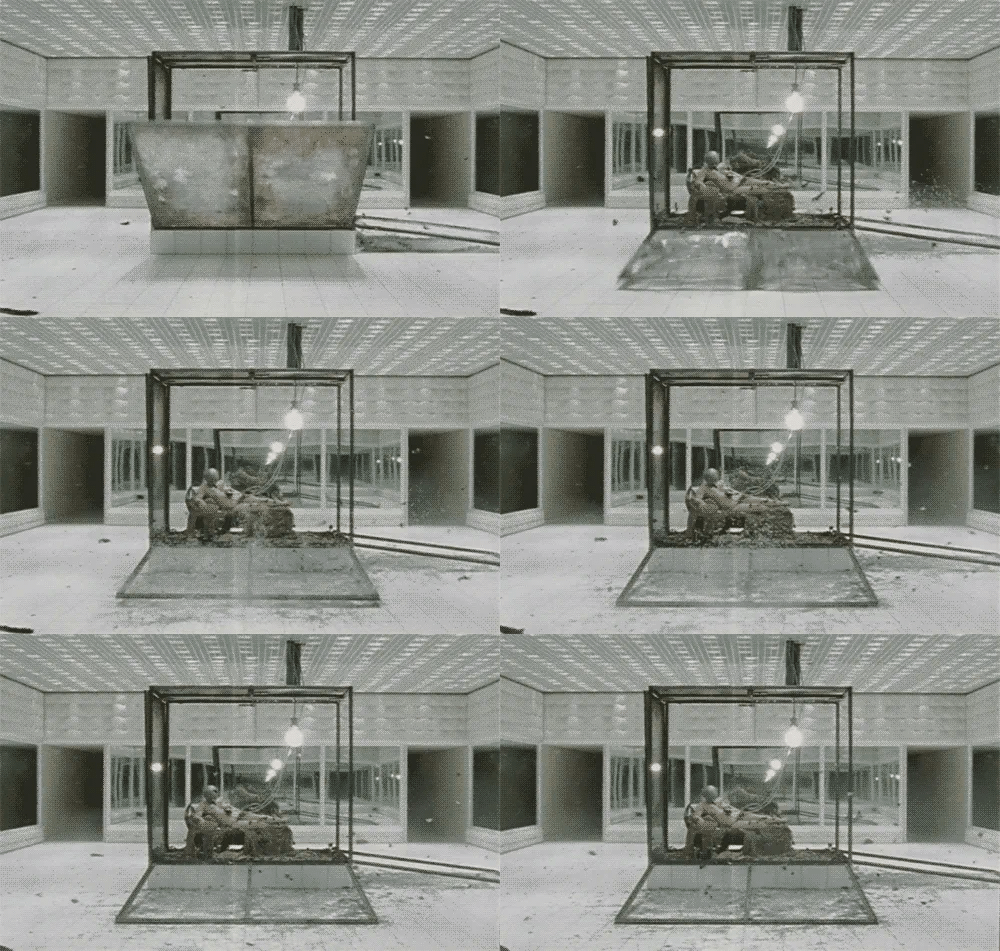
By Voss (2001), the story telling had sharpened into something closer to cruelty, models watching themselves inside a mirrored box while the audience watched them watch, and when the walls dropped, a naked woman on a chaiselong, face masked, moths pouring off her skin is revealed. You came for beautiful clothes, you got a body that refuses to perform to the beauty standard, and by then the monster had left the stage entirely. She was in the seats, and she caught you looking.
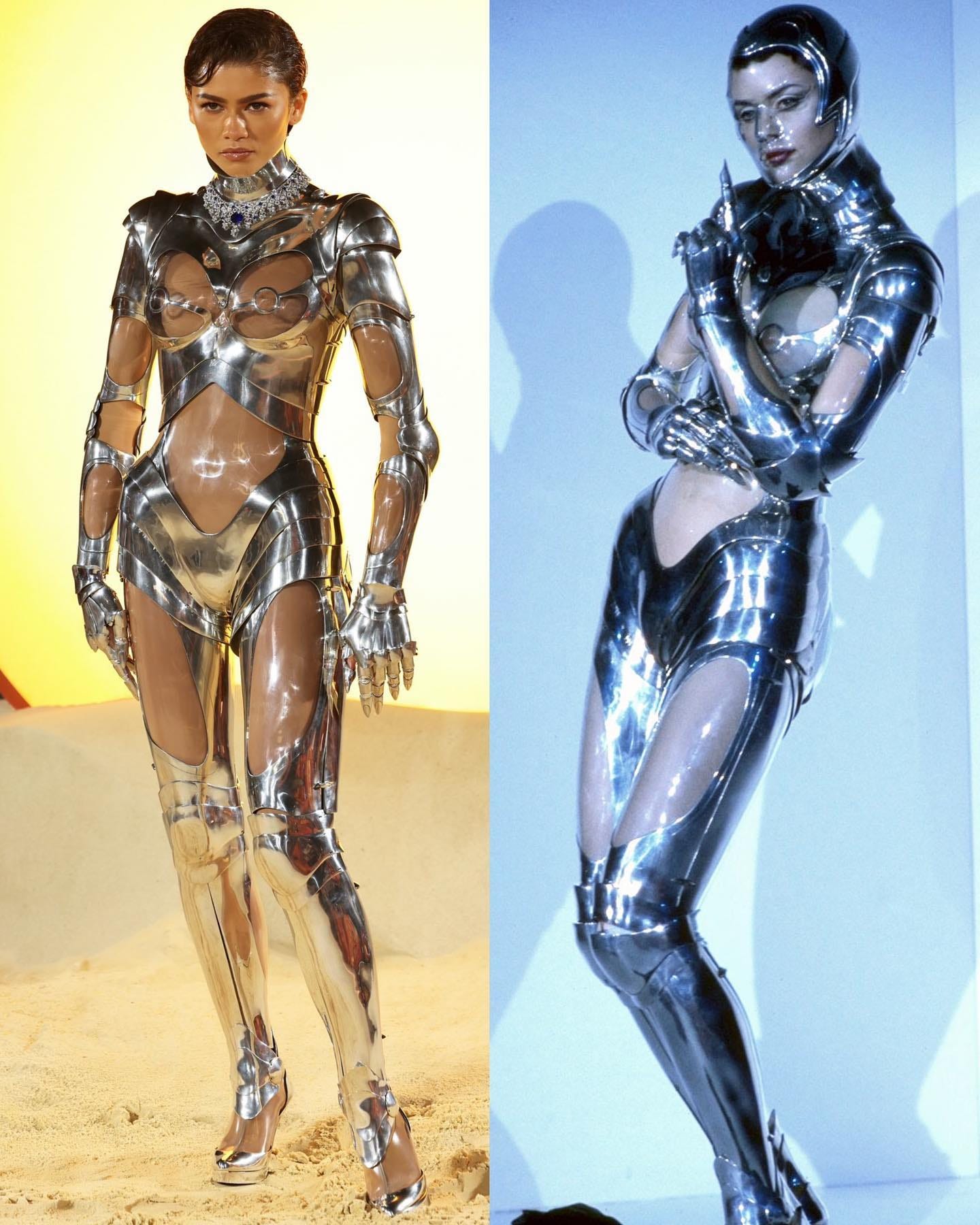
Thierry Mugler ran the same wound the opposite direction. Where McQueen tore the body open, Mugler armoured it in metal. Chrome corsets, latex wings, mechanical insect women and bodies than looks manufactured, than born. One designer exposed the violence inside the body, the other rebuilt it as something no longer entirely human, and we applaud both because deep down we all know the human silhouette was always negotiable. You don’t even need a runway anymore, because the mutation is now in your pocket, smoothing and lifting a few forgiving pixels at a time, arriving as self-improvement… which is exactly how the best monsters have always arrived.
The Wound Inherited
Move the story somewhere the Empire actually landed and the stitches stop being charming. Eka Kurniawan opens Beauty is a Wound with a woman climbing out of her own grave after twenty-one years, which already tells you the kind of book you’re in. Dewi Ayu, a prostitute in a fictional Indonesian town of Halimunda, has four daughters, three beautiful enough to ruin men, and the youngest so spectacularly ugly that Dewi Ayu names her Beauty and prays the curse of being looked at will pass her by. Around them, Kurniawan runs the whole bloodied twentieth century of Dutch colonialism, the Japanese occupation, the 1965 massacres, and the inevitable comfort stations. Ghosts and ghouls wander through chapters and lives like neighbours, and none of it is for decoration.
Shelley’s creature is something the powerful built and disowned, a fear pushed outward into a body that can be blamed. Kurnaiwan won’t let it work that way. In his hands the monstrous settles inside the humans themselves, generations after generations, in the way we all know trauma actually travels, down through the blood, paid for by people who never agreed to the debt. The curse is what is left after what was done to them, and it doesn’t wash out easily. Which make the magical realism of this story something rawer than style, because the ghosts and the resurrections are the only forms precise enough to record what the official versions refuses to hold. The unbelievable thing is that the unbelievable parts are the parts that actually happened. It is the same wound McQueen kept slicing open, including the country, a date and a body count.
The Ghosts Outside 7-Eleven
Kurniawan took a living nightmare and set it on the page, into a novel, where readers meet the supernatural as literature. Twice removed, I met the book translated into English, the craft admired at a further distance still. That is what stories from this part of the world so often has to do, translate the ordinary into the remarkable so it reads as fiction. But South East Asia doesn’t experience it as story as much as a given. Where I am, in Bangkok, Thailand, there is a spirit house outside the 7-Eleven with a a red Fanta and a marigold garland going brown in the heat, set out fresh that morning by someone with a phone in their other hand. The membrane between the mundane and the otherworldly stays unsealed here, because no one ever felt the need to seal it. Kurniawan writes his ghosts, but on street level, we feed it.
Start with Phi Krasue, because she is the whole essay with a different face (and head). By day she is unassuming, often lovely, described as part of the community. By night her head detaches from her body and drifts off into the dark trailing her stomach and intestines behind it like a wet veil, hunting for blood, raw meat, and the afterbirth left at the edge of the village. Call her simply a vampire, or a demon and you have missed her completely. She is a woman whose appetite grew larger than her body could hold, and the appetite carried on growing without her consent. The entrails are grotesque and they are also the most honest thing about her. We have met her before in this New Lore Order series, she is the Maiden after the threshold, iconically Pearl with her organs out.
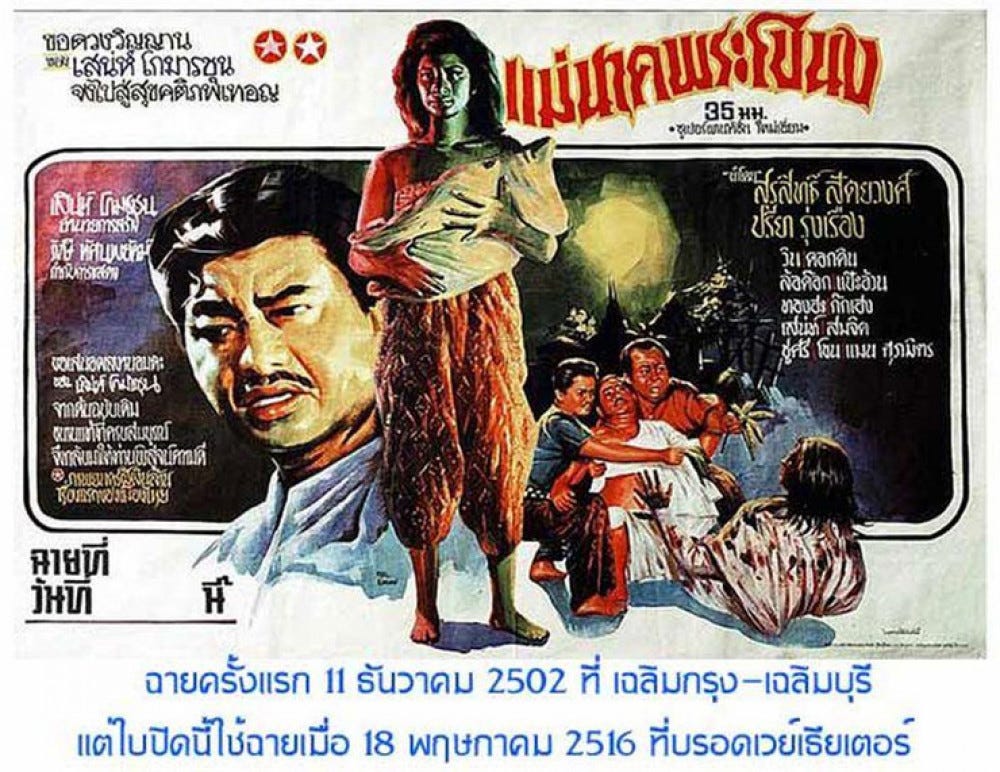
And she has company. Phi Pop, who east you from the inside, drawn to cruelty and is also fed by it. Nang Tani, the young woman in green who lives in the banana tree and is gentle until she isn’t. Mae Nak, who loved her husband so hard that dying did nothing to stop her from playing house and raising her child as a corpse. Emotional states given agency and an address, and none of them agreed to be metaphors.
But you learn the gradations because not everything in the unseen world is a monster. Some are Thewada (เทวดา), or Chao Thi (เจ้าที่) - the guardians of the land and the house, powerful and owed respect and nothing at all like a hungry ghost. The spirit house is a negotiation, or a way of keeping something strong on your side, or at least not against you, and anyone who reads it as a horror prop has misunderstood the genre entirely.
However, living with them, in this sense is not the soft option. It is, in some ways, far more frightening because nothing is contained. Both the respect and the fear is felt at the cross roads you walk through everyday, in the banana tree behind the house, or in the corner of the room where the air goes wrong. The English language gave itself one word, ghost, and made it mean scary. The Thais kept a whole unwritten vocabulary, because when the door stays open you need to know exactly what just walked in.

About The Gloss
Each NEW LORE ORDER essay comes with The Gloss: The essay’s shadow archive, where sources get their full context, where the work shows its seams, and where you can follow the same paths I did.
The Gloss for ‘How to Make a Monster’ goes live this Sunday. This edition is (currently) free and available to read for all subscribers. If you’re someone who lives in both realms, the material and the mythic, and want to go deeper than the essay allows, this room is built for you. Your weekly rabbit hole. Marginalia and syllabus in one.
Subscribe to KINNAREE or free, or become a paid subscriber for £8 per month to support my work (and my dreams) and for access to the full research archive as the series continues.
Wonderful to read, and beautifully written. Long obsessed with monsters, this delivers depth to both their horror and magnetic beauty.